|
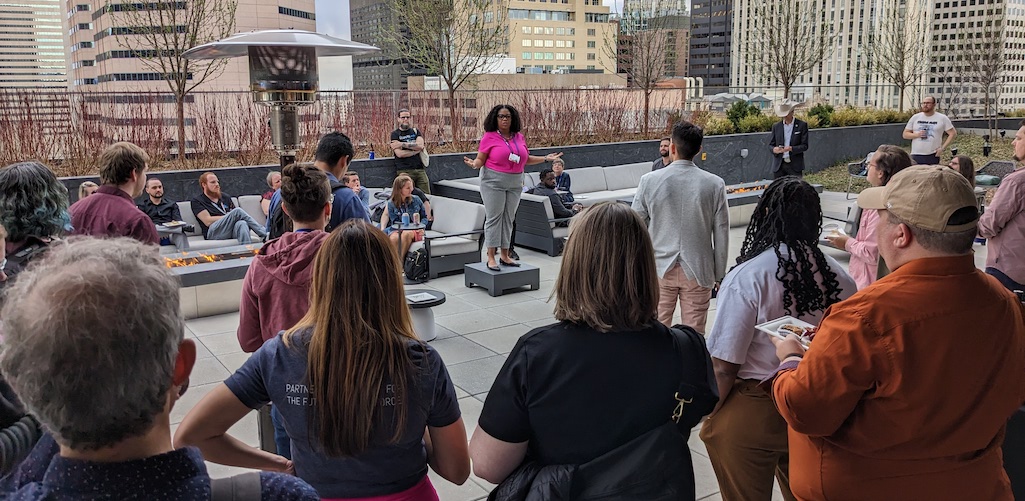
Last month, we had the pleasure of hosting a Salesforce Community Happy Hour at the Nonprofit Technology Conference (NTC) alongside some folks from OpenTent! We thought we’d take a moment to reflect on this wonderful community event. As the evening sun set over the Denver skyline, a group of nonprofit, education, and technology professionals gathered at our Salesforce community happy hour event, held mere blocks away from the NTC conference.
Issue 395 Happy Monday, Trailblazers! Congratulations, you made it to May! In case you missed the announcement, the Salesforce Social Team has announced a consolidation of all Salesforce.org social channels— meaning an end to the nonprofit/education specific channels. More on that announcement below! I wanted to take a moment to encourage folks to follow @picnet on Twitter and Soapbox Engage on LinkedIn. In addition to curating the PUB Crawl, we like to stay on top of all things Salesforce and #nptech and share important updates/helpful resources on our social channels. You can even follow hashtags like #PUBCrawlNewsletter and #SalesforceNonprofit on Twitter to get notifications for topical posts! Scroll on down for the latest solutions, ideas, and questions from the Trailblazer community! Don't forget, you can have the goodness of the PUB Crawl delivered into your inbox each Monday morning by subscribing today!
The main purpose of nonprofit branding is to communicate who your organization is and what you stand for. Even though you aren’t selling a product or service—which is how for-profit organizations use their brands—you’re essentially “selling” your impact to encourage engagement among current and prospective supporters. However, your brand isn’t something you create once and never revisit. As your organization grows and evolves, you may consider rebranding to ensure your visuals and messaging continue to align with your mission and help you achieve your goals.
As a nonprofit professional, you probably dedicate most of your time to running your programs and fundraising. After all, furthering your organization’s mission is why you work hard every day! When using this operating model, however, nonprofit financial management activities often take a backseat. It’s essential to understand and proactively manage your finances so your organization has the resources to provide services and complete projects. Financial management works side by side with fundraising to allow your organization to fulfill its mission.
Issue 143 Happy Tuesday, Fundraisers! Here in DC, spring is in full bloom! I hope this time of year has revived you with breezy days and lots of sunshine. On a different note! Does your nonprofit use Salesforce as your CRM? If so, you should check out our other weekly newsletter, the Pub Crawl! This is a weekly curation of top posts from the Salesforce Nonprofit Trailblazer Community. Product updates, upcoming events, community-driven solutions, questions & ideas galore! Scroll on down for the latest fundraising ideas and strategies relating to matching gifts, P2P fundraising, and major gifts! You can receive the Fundraising Weekly newsletter each Tuesday by subscribing today!
Issue 142 Happy Tuesday, Fundraisers! Take a moment to check in with your strategy when asking for donations. Whether you're crafting an email ask, social media post, event invitation, or updating your website's donation page, your wording impacts the outcome. Check out this FREE 15 page guide to learn about five easy ways to boost your wording when asking for donations! Scroll on down for the latest fundraising ideas and strategies relating to campaign messages, public speaking, and volunteer recruitment! You can receive the Fundraising Weekly newsletter each Tuesday by subscribing today!
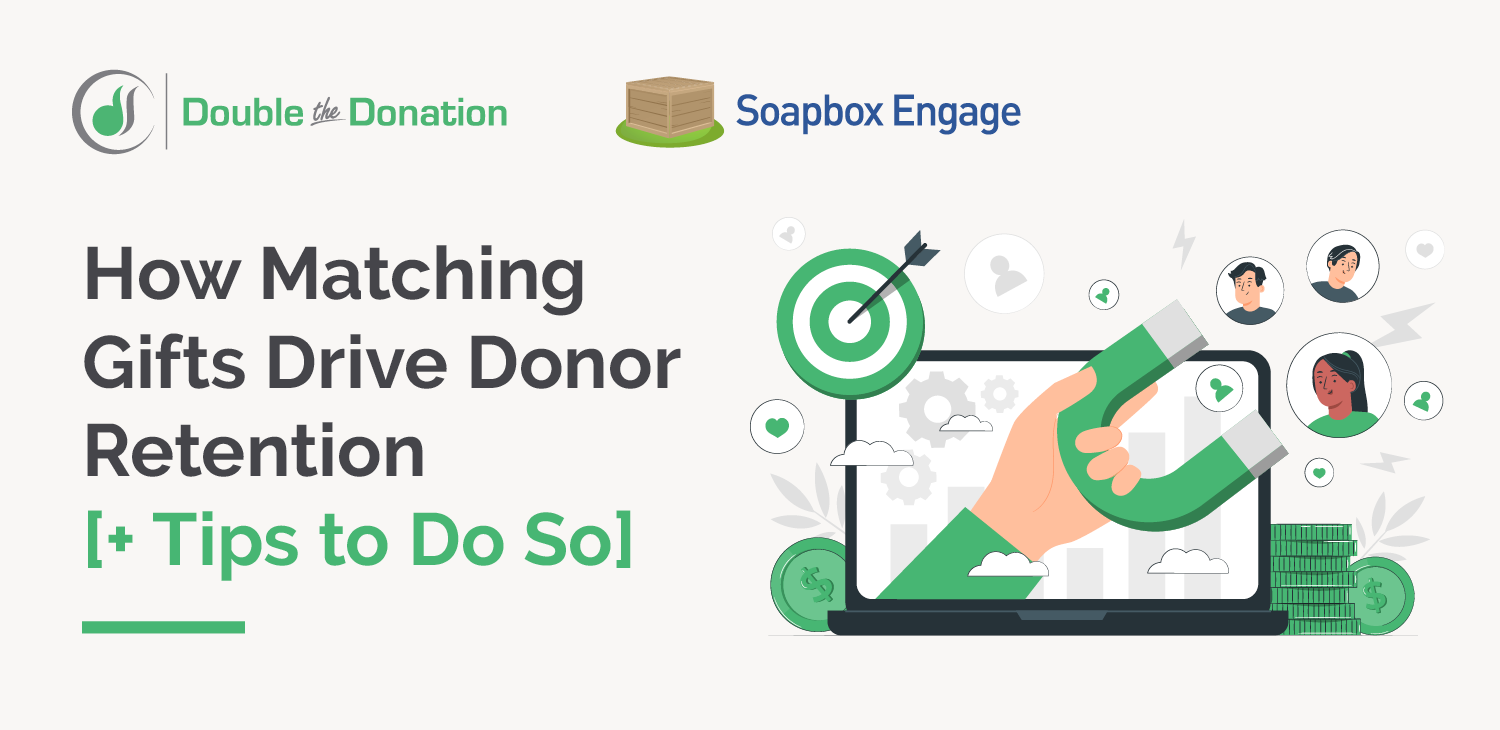
Donor retention is a critical factor for the success of any nonprofit. After all, securing repeat donations from existing supporters is significantly more cost-effective than constantly pursuing one-time gifts. Yet more often than not, new donors do not give back to the same organization the following year. This is a significant roadblock for nonprofit fundraisers, and as a result, many teams are constantly on the lookout for innovative ways to retain support over time. One way to address this challenge is through corporate matching gifts.
When building a campaign for your nonprofit, it takes a lot to ensure it is successful. But one of the most important pieces of the campaign is your campaign message. Your campaign message is the core of your campaign strategy. It is how you communicate with your audience and tie donations to impact. It has to be catchy! A campaign message needs to be something that piques interest and encourages people to be involved.
Issue 141 Happy Tuesday, Fundraisers! Greetings from Denver! I’m here for the Nonprofit Technology Conference, hoping I’ll see some of you this week! Don’t forget to RSVP for the Salesforce Happy Hour hosted by Soapbox Engage and OpenTent. Scroll on down for the latest fundraising ideas and strategies from trusted professionals around the world! You can receive the Fundraising Weekly newsletter each Tuesday by subscribing today!
Issue 140 Happy Tuesday, Fundraisers! I’m counting down the days to the Nonprofit Technology Conference. 2023 has brought a lot of major announcements and changes in the world of #nptech. Let’s chat about them over happy hour— we’ve got a great rooftop location close to the conference with a scenic view of Denver! Scroll on down for the latest fundraising ideas and strategies from trusted professionals around the world! You can receive the Fundraising Weekly newsletter each Tuesday by subscribing today!
Artificial Intelligence (AI) has been a large topic of discussion lately. You’ve most likely heard people talking about ChatGPT. ChatGPT is an online tool that uses artificial intelligence and machine learning to understand and respond to requests entered by its users. It has the ability to generate human-like responses to just about anything asked of it. Which means it’s something you can make use of in your communications, engagement, and fundraising efforts. This blog will walk you through 8 ways ChatGPT can be a valuable tool in nonprofit fundraising!
Last week, Salesforce announced a new vision for Nonprofit Cloud, the suite of Salesforce nonprofit technology solutions built for the nonprofit sector. With this announcement, Salesforce noted that the existing industry-specific apps used by thousands of nonprofits will continue to be supported. These include Nonprofit Success Pack (NPSP) for fundraising and relationship management and the Program Management Module (PMM) for client and program management, as well as the Power of Us program that donates the first ten licenses free to nonprofits.
Issue 138 Happy Tuesday, Fundraisers! In a few weeks, I’ll be heading to Denver for the Nonprofit Technology Conference. Along with some wonderful folks over at OpenTent, Soapbox Engage will be hosting a Salesforce Community Happy Hour! Come ask questions about Nonprofit Cloud and NPSP, share your nonprofit dreams and goals, or connect with friends old and new. If you’re planning to attend NTC, please join me at the Salesforce Community Happy Hour— even if your organization is not currently using Salesforce! RSVP here.You can receive the Fundraising Weekly newsletter each Tuesday by subscribing today!
As a nonprofit professional, you understand that organizations like yours host events for a variety of reasons, including fundraising, supporter engagement, and donor appreciation. Nonprofits can also host events that have another purpose: advocacy, or spreading awareness of a cause or issue related to your organization’s mission. Although rallies are the most common and specific awareness events, there are other types of advocacy events you can run, such as hosting an educational event like a webinar or panel to help your community better understand the cause you’re advocating for. Plus, some fundraising events have advocacy as a secondary purpose, especially if they leverage peer-to-peer campaigns to grow your organization’s network.
Issue 137 Happy Tuesday, Fundraisers! In exactly one month I’ll be heading to Denver for the Nonprofit Technology Conference. Will I be running into any of you while I’m there? Stay tuned for details on a little nonprofit tech/fundraiser happy hour that we’re planning! Scroll on down for the latest fundraising ideas and strategies, with great tips relating to recurring donations, digital presence, direct mail fundraising, and more! You can receive the Fundraising Weekly newsletter each Tuesday by subscribing today!
As a nonprofit professional, you understand the importance of a strong donor communication strategy. Regular communication with your supporters that involves fundraising updates, recent projects and general donor appreciation messages can help your donor base stay engaged and eager to give back to your cause on a recurring basis. However, if you’ve noticed a drop in engagement or are experiencing slowdowns in your fundraising progress, it’s time for a change. A nonprofit communications audit helps you take a deep dive into your existing communication strategy and assess what’s working well and what’s not. With this information, you’ll be better prepared to reach supporters in a way that resonates with them and motivates them to get more involved in your nonprofit’s efforts.
Having a website dedicated to your cause is central to an effective nonprofit digital marketing plan. After all, a website allows you to do everything from driving donations and boosting event registrations to empowering beneficiaries to access your services. However, it’s not enough to design a visually-stunning and information-packed website, push it live, and call it a day. Instead, you’ll need to be proactive in identifying issues with your site and resolving them, maintaining a strong web presence so that your site remains a reliable tool for getting involved with your cause.
In today's fast-paced business world, it's becoming increasingly important for nonprofits to leverage technology to streamline their processes and increase their efficiency. Salesforce, a popular customer relationship management (CRM) platform, is one such technology that can help businesses achieve these goals. However, managing Salesforce can be a daunting task, especially for nonprofits that lack the necessary resources or expertise. That's where Salesforce Managed Services come in. In this blog post, we'll take a closer look at what Salesforce Managed Services are, their benefits, and why they're important for nonprofits of all sizes.
Issue 136 Happy Tuesday, Fundraisers! Now that February is over, can we just start calling it spring? Even if the season won’t officially be here for a couple more weeks, check out these 5 Fundraising Ideas for Spring to get inspired! Scroll on down for the latest fundraising ideas and strategies, with great tips relating to social media fundraising, leveraging videos, planned gifts, and more! You can receive the Fundraising Weekly newsletter each Tuesday by subscribing today!
Issue 135 Happy Tuesday, Fundraisers! Get ready to say goodbye to February and welcome a new month! Soapbox Engage has a brand new free downloadable guide, and I wanted you all to be the first to know. Most nonprofits are constantly on the lookout for new and innovative ways to increase their organizations’ revenue and better establish funding for their missions. If that sounds like you, check out our Guide to Volunteer Grants to learn about this unique funding strategy. You can receive the Fundraising Weekly newsletter each Tuesday by subscribing today! |







 Donations
 Events
 Petitions
 Forms
Forms Shop
Shop Directories