
Whether you’re requesting a donation, promoting your merchandise, or extending event invitations, your nonprofit regularly reaches out to donors to garner their support. However, not all types of donor outreach are equally effective.
To help you create an unbeatable donor communications strategy, this guide will explore key donor outreach channels and how your nonprofit can leverage them to deepen relationships, improve retention, and earn more valuable gifts.
5 Types of Donor Outreach Your Nonprofit Should Prioritize
1. Direct Mail
While many nonprofits might default to email these days, direct mail is actually one of the most effective channels when it comes to engaging donors. Meyer Partners’ guide to direct mail fundraising emphasizes how traditional mail cuts through the digital noise and has a response rate that’s almost triple the average email click-through rate.
Use direct mail to form connections with donors by:
- Sending unique content. Get creative with your direct mail content. Along with solicitation letters, you can send postcards, greeting cards, calendars, printed impact reports, flyers, and even packages through the mail. These types of stewardship outreach will make your nonprofit stand out and help donors build a connection with your cause.
- Personalizing messaging. Compared to digital channels, direct mail automatically feels more personal as recipients consider the time and effort it took to send a letter compared to shooting off an email. Capitalize on these feelings by personalizing mail communications to each donor and adding sentimental touches, like handwritten thank-you cards.
- Making giving easy. For your fundraising appeals, make donating as easy as possible. For example, you might add a QR code to your appeal letter and include a pre-paid envelope that donors can use to mail back a check. You can even provide a form that donors can simply add their credit card information to for more flexibility.
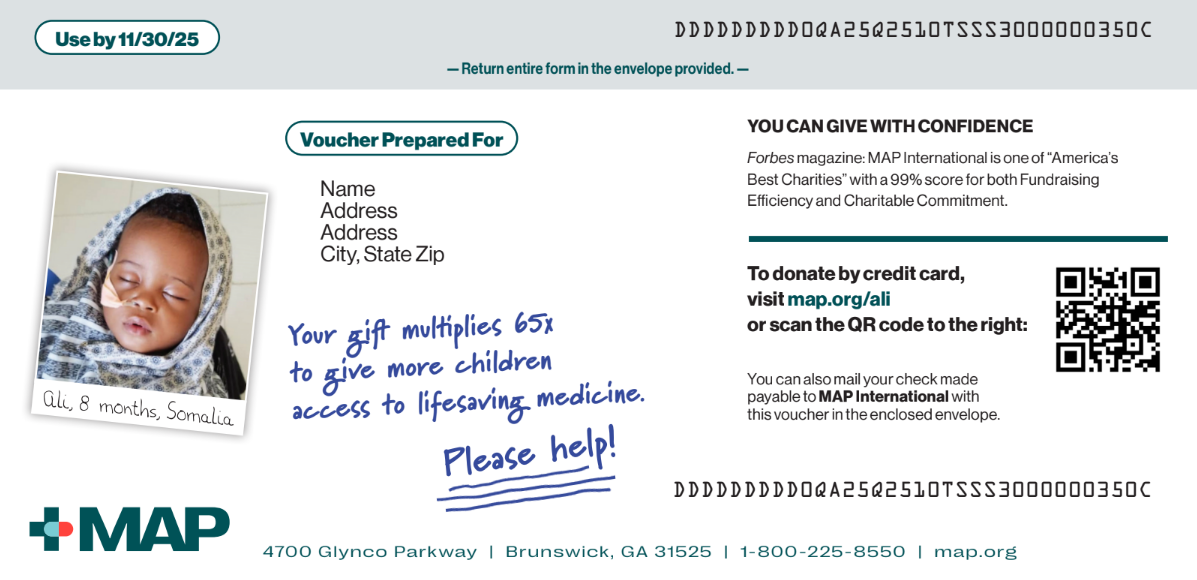
Getting something in the mail always feels a little special, and thoughtful donor outreach through this channel can lay the foundation for reliable, valuable donations.
2. Email
Emails are fast and easy to send, making them a staple of many donor outreach strategies. However, this means almost every other nonprofit out there is also competing for your donors’ attention via email.
Ensure your messages stand out by:
- Using creative subject lines. Consider what makes you click on an email. Experiment with subject lines that share interesting facts, ask questions, or instill a sense of urgency. For example, during your year-end fundraiser, you might emphasize how few days there are left to give.
- Personalizing emails. Segment donors based on their previous interactions with your nonprofit to ensure they receive content that’s relevant to them. For example, you might create one email list for local supporters and another for those who live abroad. Then, you would only send promotions for in-person events to your local supporters.
- Leveraging multi-media elements. Leverage the potential of digital tools to share content in new ways. For example, as part of your donor welcome series, you might add a welcome video that shows off your programs, staff, or other parts of your nonprofit.
As with any communication channel, pay attention to relevant metrics. For email, this means monitoring open rate, click-through rate, and conversion rate. Assess these metrics to determine what types of email outreach best resonate with your supporters.
3. Phone Communications Calls
The more your nonprofit does to put a human face on your organization, the more you’ll be able to connect with supporters. When it comes to donor outreach, this means talking to donors one-on-one, and phone calls are one of the easiest ways to do this at scale.
To ensure phone calls go smoothly and address all points you want to share with donors, create a script. Bloomerang’s fundraising script guide outlines the four core elements your script should include:
- Introduction. Callers should start by introducing themselves, explaining that they’re calling on your nonprofit’s behalf, and confirming they have reached the right person. Acknowledge their past involvement or donations, such as thanking them for their most recent gift.
- Fundraising opening line. The key to a successful fundraising conversation is to engage the donor and capture their interest before making your ask. Rather than having callers rattle off a list of updates about your nonprofit, connect with the donor by inviting them to share their input. In other words, make your phone call a conversation by asking donors for their thoughts on a recent program or inviting them to share their reasons for supporting your cause.
- The ask. Once donors are engaged, move into a clear and concise fundraising request. State what you are asking for funding for, how it helps advance your mission, and how much you propose the donor contribute.
- A thank you. Regardless of the donor’s response, end your call by thanking the donor for their time and consideration.
When making calls, a number of prospective donors might not pick up the phone, especially if they don’t recognize your nonprofit’s phone number. If donors don’t answer, have a script ready that callers can use to leave a message. Additionally, leverage tools like SMS texting and ringless voicemails. These can help you get in touch with donors if they aren’t picking up their phones.
4. Website
When new supporters want to connect with your nonprofit, their first instinct is often to look you up online. When they do, they should find a professional website that explains your mission, provides detailed descriptions of your programs, and makes getting involved with your cause easy.
Leverage your website as part of your donor outreach strategy by:
- Creating a user-friendly interface. The easier your website is for supporters to navigate, the more likely they are to engage with your content and get involved. Improve your user-friendliness by creating a central navigation menu with intuitive labels, reducing clutter to guide supporters’ attention, and creating clear call-to-action buttons that lead to core pages, like your donation form.
- Adding social media integrations. Encourage supporters to continue connecting with your nonprofit even after they leave your website through social media integrations. Use these tools to promote your social media pages and inspire supporters to post about their experiences with your nonprofit.
- Leveraging other websites. While your main website is your nonprofit’s online home base, there may be occasions where it makes sense to launch a microsite or experiment with external fundraising websites. For example, during a crowdfunding campaign, you might host your campaign on an external site that provides all the tools you need. Then, you would direct traffic there from your main website.
Creating a professional website might be intimidating at first, especially if your nonprofit’s staff lacks coding knowledge. Fortunately, there is a range of templates and website builders with drag-and-drop tools that make designing a website simple.
5. Events
You might not think of events as an outreach channel, but in-person meet-ups and activities are vital for building connections and establishing your nonprofit in your community.
Create a fundraising calendar that includes a range of events to appeal to numerous audiences. For example, you might host a community picnic to connect with families, a gala to network with major donors, and an informational demonstration to spread awareness of your target issue.
Ensure that several members of your fundraising team attend these events. In-person gatherings are a key opportunity to establish face-to-face connections that help you acquire new donors, secure additional gifts, and deepen relationships that can result in valuable donations.
Donor outreach is essential for cultivating a supporter community you can rely on. Leverage a range of channels to connect with multiple donor audiences, and always make your communications thoughtful, personalized, and memorable.
Remember that taking a multi-channel approach is best, so don’t limit yourself to just email or your website. Instead, mix traditional and online outreach by supplementing your direct mail with emails or following up after an event with a personal phone call. Pay attention to your donors’ reactions and consider your nonprofit’s budget to find the outreach mix that works best for you and your audience.

 Donations
 Events
 Petitions
 Forms
Forms Shop
Shop Directories